
How to Clear Acne Naturally Without Damaging Your Skin Barrier
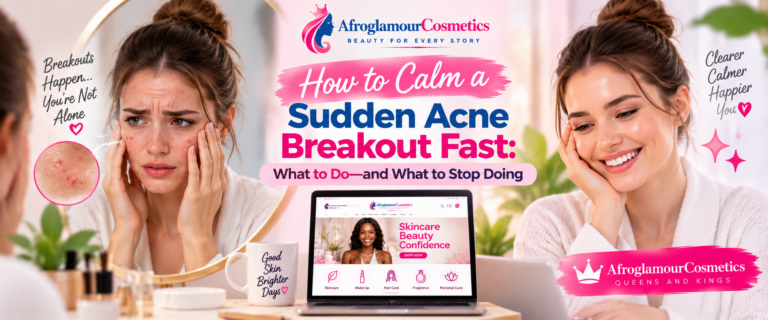
Acne appears—and suddenly you want to scrub it, dry it, exfoliate it and throw every acne treatment in your bathroom at it.
But Queens and Kings, what if fighting your acne too aggressively is actually making your skin more irritated?
One of the biggest mistakes people with acne-prone skin can make is focusing so much on eliminating pimples that they forget about something equally important: the skin barrier.
Clearer-looking skin isn’t about punishing your face. It’s about creating a consistent routine that helps control breakouts while keeping your skin properly cleansed, moisturized and protected.
Let’s talk about how to clear acne naturally without damaging your skin barrier.
First: What Is Your Skin Barrier?
Think of your skin barrier as your body’s protective outer shield.
It helps retain moisture while protecting your skin from environmental irritants and other external stressors.
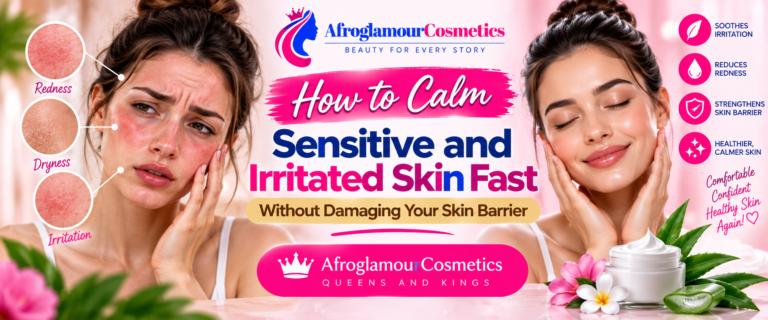
When that barrier becomes irritated or compromised, your skin may feel:
- Dry or unusually tight
- Rough or flaky
- Sensitive
- Itchy
- Red or inflamed
- Uncomfortable when products are applied
Here’s where many people with acne get trapped.
They see pimples and immediately think:
“I need stronger products.”
So they scrub harder, exfoliate more frequently, wash repeatedly and combine several strong active ingredients.
Your acne routine should not become a battle against your own skin.
1. Cleanse Your Skin—Don’t Strip It
Acne-prone skin needs cleansing, but clean doesn’t mean stripped.
Washing aggressively or too frequently can leave your face feeling tight and uncomfortable.
Instead, use an appropriate cleanser and gently cleanse your face, generally morning and evening and after significant sweating.
Use lukewarm rather than extremely hot water and massage your cleanser gently rather than aggressively scrubbing your skin.
For acne-prone skin, certain products contain ingredients such as salicylic acid, which can help unclog pores.
AfroglamourCosmetics currently carries products specifically categorized for acne and pimples, so you can start by exploring our Acne / Pimples Treatment Collection when building your routine.
2. Stop Scrubbing Your Pimples
Queens and Kings, acne isn’t dirt that needs to be scrubbed away.
Physical scrubbing cannot simply scrub acne out of your pores.
In fact, aggressive rubbing and excessive exfoliation can leave already-inflamed skin feeling even more irritated.
Your skin does not need punishment.
It needs consistency.
If you’re exfoliating, be thoughtful about the type of exfoliant you’re using, how frequently you’re using it and what other active ingredients are already in your routine.
More exfoliation doesn’t automatically mean faster results.
3. Consider Salicylic Acid for Clogged Pores
Salicylic acid is one of the best-known over-the-counter acne ingredients.
As a beta-hydroxy acid (BHA), it can penetrate into pores and help remove material that contributes to clogging. This makes it particularly useful for blackheads, whiteheads and oily, acne-prone skin.
But remember our rule:
More isn’t necessarily better.
If you’re new to active ingredients, introduce them gradually rather than combining multiple exfoliating products immediately.
AfroglamourCosmetics carries Bioré Charcoal Acne Clearing Cleanser, which is listed in our Acne/Pimples Treatment collection and contains salicylic acid.
The store also carries Fair & White So White Acne Medication Cleanser, formulated with salicylic acid and aloe vera for oily/combination acne-prone skin.
Choose products according to your individual skin needs rather than trying everything simultaneously.
4. Moisturize—Yes, Even If Your Skin Is Oily
One of the most damaging acne myths is:
“I have oily skin, so I shouldn’t moisturize.”
Oil and hydration are not the same thing.
Acne-prone skin still benefits from an appropriate moisturizer, particularly when you’re using ingredients that can be drying or irritating.
Look for lightweight, non-comedogenic options appropriate for your skin type.
AfroglamourCosmetics currently carries products specifically designed around hydration and barrier care, including A-Derma Phys-AC Hydra Moisturising Face Cream and A-Derma Dermalibour Barrier Protective Face Cream.
Your routine should aim for balance:
Cleanse → Treat → Moisturize → Protect.
5. Be Careful With DIY Acne Remedies
“Natural” does not automatically mean gentle.
This is especially important when you’re searching online for natural ways to clear acne.
DIY recommendations sometimes involve applying substances such as undiluted essential oils, lemon juice, toothpaste or harsh homemade scrubs directly to the face.
Your face is not a kitchen experiment.
Something being natural doesn’t guarantee that it is safe or suitable for your skin.
Instead, think of “natural acne care” as supporting your skin with sensible habits: gentle cleansing, adequate hydration, avoiding picking, keeping things that touch your face clean, managing sweat, eating a balanced diet, sleeping adequately and using evidence-based skincare appropriately.
6. Don’t Pick or Squeeze Your Pimples
We know.
That whitehead is practically begging you to squeeze it.
Don’t.
Picking and squeezing can increase inflammation, damage surrounding skin and increase the likelihood of lingering dark marks or scars.
This can be particularly frustrating for melanin-rich skin, where post-inflammatory hyperpigmentation can remain long after the original pimple has disappeared.
Instead of chasing individual pimples, build a routine that helps reduce future breakouts.
7. Your Pillowcase, Phone and Makeup Brushes Matter
Sometimes better skincare isn’t about buying another serum.
It’s about changing everyday habits.
Consider how frequently these objects touch your face:
Your phone. Your pillowcase. Your hands. Your makeup brushes. Your towels.
Clean your phone regularly, wash makeup brushes, change pillowcases frequently, avoid sharing face towels and try not to touch your face unnecessarily.
Small habits become important when repeated every single day.
8. Protect Acne-Prone Skin From the Sun
Sunscreen deserves a permanent place in your morning skincare routine.
Sun protection is especially important if acne leaves dark marks behind or if you’re using skincare ingredients that can make your skin more sensitive to sunlight.
AfroglamourCosmetics currently carries Fair & White So White! Sunscreen SPF 50, described as lightweight, UVA/UVB protective and non-pore-clogging, with a formula intended not to leave white residue on darker skin tones.
Another option available from AfroglamourCosmetics is CLIV Max Hyaluronic Propolis Sun Cream SPF 50, which is described as moisturizing and non-comedogenic.
For the UAE and wider GCC—where strong sun exposure is an everyday consideration—SPF shouldn’t be an afterthought.
9. Keep Your Acne Routine Simple
You don’t necessarily need ten products.
For many people, a basic routine is a much better starting point.
MORNING
Step 1: Gentle cleanser
Step 2: Appropriate treatment, if needed
Step 3: Lightweight moisturizer
Step 4: Broad-spectrum sunscreen
EVENING
Step 1: Remove makeup and sunscreen
Step 2: Gentle cleanser
Step 3: Appropriate acne treatment
Step 4: Moisturizer
Introduce new active products gradually so you can understand how your skin responds.
10. Learn to Recognize When Your Skin Is Asking for a Break
Your skin may be telling you something if:
Everything suddenly stings.
Your face feels extremely tight after cleansing.
You’re experiencing unusual flaking or irritation.
Products that previously felt comfortable suddenly burn.
Instead of automatically adding another active ingredient, review your routine.
You may be using too many potentially irritating products at the same time.
Sometimes simplifying your routine and prioritizing gentle cleansing, moisturizing and sun protection is the more sensible approach while seeking professional advice if symptoms persist.
11. Lifestyle Matters—but Don’t Blame Yourself for Acne
Healthy habits support healthy skin, but acne is a complex condition.
Aim for adequate sleep, regular movement, balanced nutrition, sufficient water intake and sensible stress management.
However, don’t assume that someone has acne simply because they don’t drink enough water or aren’t eating “clean.”
Acne can be influenced by hormones, genetics, medications and other factors that skincare alone cannot always control.
12. Give Your Routine Enough Time
This is one of the hardest parts.
You use a product for four days, see another pimple and decide:
“It’s not working!”
Then you buy something else.
Constantly changing products can make it difficult to determine what is actually helping.
Take periodic photographs and track your progress over time rather than inspecting every pore several times a day.
Healthy skincare is a process—not an overnight transformation.
Your Acne-Prone Skin Doesn’t Need a War
Queens and Kings, remember this:
Acne-prone skin is still skin that deserves care.
You don’t have to choose between treating breakouts and protecting your skin barrier.
Gentle cleansing, carefully selected acne treatments, consistent moisturizing, daily sun protection and good skincare habits can work together.
The goal isn’t to dry your skin until every drop of oil disappears.
The goal is healthier, balanced, resilient skin with fewer breakouts.
Ready to Build Your Acne-Safe Skincare Routine?
Don’t randomly combine products because social media says they’re trending.
Start with your skin concern.
Explore the AfroglamourCosmetics Acne / Pimples Treatment Collection to discover cleansers and targeted skincare for blemish-prone skin.
Then explore our broader Skin Care Collection for moisturizers, cleansers, sunscreen and other products that can help you build a complete routine.
AfroglamourCosmetics Queens and Kings 👑
Your skin doesn’t need perfection.
It needs understanding, patience and consistent care.
Shop smarter. Treat gently. Protect your barrier. Give your skin time.
AfroglamourCosmetics — Beauty for Every Story.
This article provides general skincare information and is not medical advice. Persistent, painful, cystic, sudden or scarring acne should be evaluated by a qualified dermatologist.